Control Guidelines now available

                                      12308A A5 Booklet Wilding Pine Aug 2022 WEB

These Guidelines were originally written in 2009 by Nick Ledgard, a retired forester and now adviser to the Wilding Pine Network and the Waimakariri Ecological Landscape and Restoration Alliance and they were published by the New Zealand Forest Research Institute/Scion.

The Wilding Pine Network acknowledges the Department of Conservation Community Fund which provided the funding to update these guidelines and incorporate the latest best practice.

The purpose of these 2022 Guidelines is to assist landowners, community groups, and anyone keen to get involved in wilding control with choosing the right control method.

These Guidelines do not replace the Good Practice Guides published by the National Wilding Conifer Control Programme which can be found on www.wildingpines.nz/good-practice-guides/. These Guides provide detailed guidance for large scale control methods.

The WPN guidelines compliment the Good Practice Guides by providing individuals and groups undertaking control outside the oversight of the National Programme with a summary of control methods. The Good Practice Guides contain instructions to perform the control method or methods once chosen.

We hope the 2022 Guidelines help you in your work. If you are old school and like to read an actual and not a virtual copy or you would just like some to circulate, please let me know. jo@wildingpinenetwork.org.nz
12308A A5 Booklet Wilding Pine Aug 2022 WEBThese Guidelines were originally written in 2009 by Nick Ledgard, a retired forester and now adviser to the Wilding Pine Network and the Waimakariri Ecological Landscape and Restoration Alliance and they were published by the New Zealand Forest Research Institute/Scion.

The Wilding Pine Network acknowledges the Department of Conservation Community Fund which provided the funding to update these guidelines and incorporate the latest best practice.

The purpose of these 2022 Guidelines is to assist landowners, community groups, and anyone keen to get involved in wilding control with choosing the right control method.


These Guidelines do not replace the Good Practice Guides published by the National Wilding Conifer Control Programme which can be found on www.wildingpines.nz/good-practice-guides/. These Guides provide detailed guidance for large scale control methods.

The WPN guidelines compliment the Good Practice Guides by providing individuals and groups undertaking control outside the oversight of the National Programme with a summary of control methods. The Good Practice Guides contain instructions to perform the control method or methods once chosen.

We hope the 2022 Guidelines help you in your work. If you are old school and like to read an actual and not a virtual copy or you would just like some to circulate, please let me know. jo@wildingpinenetwork.org.nz

WPN releases new policy report

This report examines the gaps and limitations in policy relating to wilding conifer management.

Although much progress has been made in recent years to control the spread of wilding conifers, there are still gaps and limitations in the current policy and regulatory frameworks which relate to wilding conifer management. The Wilding Pine Network (WPN) is concerned that these gaps and limitations may allow ongoing and future wilding conifer spread, in spite of recent control progress. The WPN is particularly concerned that the significant investment already made in wilding conifer control will not be able to be protected. Additionally, new areas of wilding conifer spread might not be prevented or effectively mitigated by the current policy settings.

The WPN commissioned this report to identify the gaps and limitations in the policy and legislative framework and recommend potential options to address these issues.

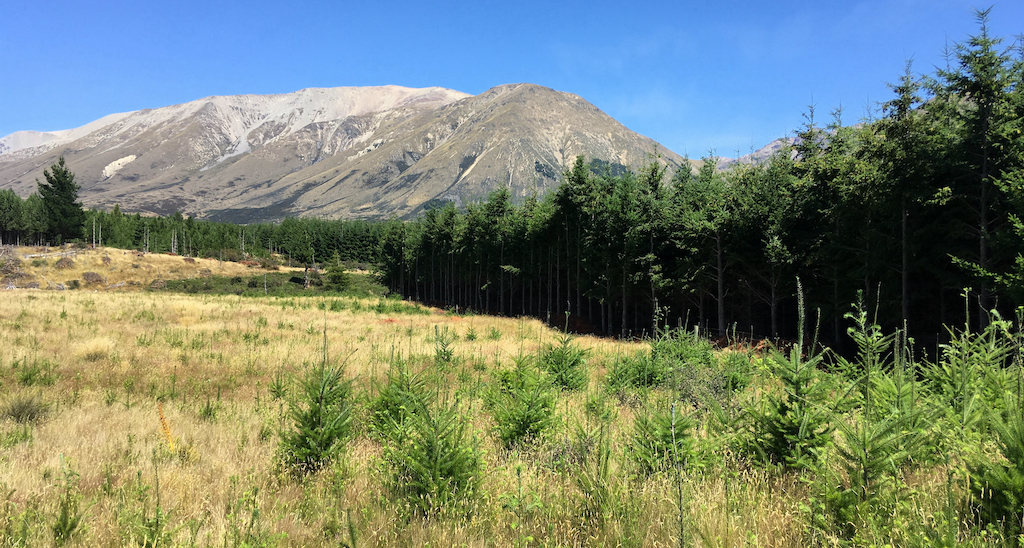
Wildings spreading from a plantation

The WPN is deliberating on the recommendations in this report. We acknowledge that conifers can be both a resource and a pest, and we need to take a balanced and holistic approach to policy and legislative changes. Additionally, education and awareness are a critical component of behaviour change, alongside potential policy and regulatory changes.

We are considering all of the recommendations in this report, and in particular the promotion of a National Pest Management Plan for wilding conifers. We also see the need to amend the Wilding Tree Risk Calculator used in the National Environmental Standards for Plantation Forestry to make it a more transparent and reliable tool. Through this report, we have also identified that we need a better understanding of existing seed sources and their spread risk. Therefore, we will explore mapping high-risk areas of wilding conifer spread to better understand and proactively manage wilding conifer spread risks

It is our hope that in sharing this report, we will help elucidate the gaps and limitations in current policy and legislation, and we will all work together towards equitable changes to prevent and mitigate future wilding conifer spread.

Download the report here: Wilding Conifer Management in NZ: Policy Report

Please direct questions and comments on this report to: info@wildingpinenetwork.org.nz.

New research on invasion/ re-invasion risks

The Vive la Resistance programme, led by Scion, has recently received funding from MBIE for a five-year research grant. This programme will focus on understanding and preventing re-invasion of wilding conifers and building on the research of the Winning Against Wildings research programme. The outcomes of the Vive la Resistance programme will transform current wilding management practices by breaking an otherwise inevitable cycle of control / re-invasion / maintenance control.

In operational control areas, even where control of wilding conifers is effective, there is a high likelihood of re-invasion of wildings either from a surrounding seed source or from wilding seeds in the seed bank. Therefore, our wildings management programme is at risk of having to commit to long-term maintenance control to continually clear re-invaded areas. By using the National Wilding Conifer Control Programme as a large-scale operational field experiment, coupled with controlled experiments and modelling, this research will quantify the risk of conifer re-invasion and identify optimal strategies to prevent it.