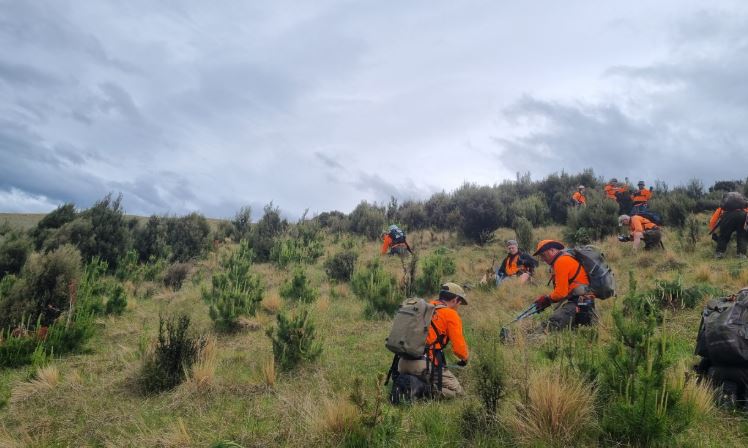
Battling wilding pines was one of two subjects all political parties were strongly agreed on at the recent Federated Farmers Rural Debate
Date: 7th October 2026
Debate Participants: Todd McClay (National), Jo Luxton (Labour), Mark Patterson (NZ First), Andrew Hoggard (ACT), Steve Abel (Green)
The following article is reprinted from an article by Rob Stock in The Post on 3rd October 2026.
One dairy farmer couldn’t hold back on her belief that the Greens had “conspired” with Dutch climate activists to complain to the European Union that New Zealand was backtracking on its climate obligations under its free trade agreement.
Her fury was aimed at MP Steve Abel, representing the Green Party, during the Federated Farmers/Beef + Lamb/DairyNZ rural debate at Mystery Creek showgrounds on Wednesday.
National, which hit out at the Greens for the move last week, has provided no evidence to support its argument that a “conspiracy” had taken place.
Abel said the party hadn’t, but admitted: “We flagged for some time that there was a risk of a complaint because New Zealand has failed in its obligations in the EU agreement … We’ve been talking about it for about three years,” he said. “That’s our job – to draw attention to risks to our economy.”
Trade Minister Todd McClay, representing National, reiterated his charge that Greens leader Chlöe Swarbrick had teamed up with a Belgian MP in April to ask for an EU investigation.
The rural debate didn’t lack for moments illuminating the political divide that threatens policy upheaval for the rural sector should the government change in November’s election.
Clash over cheese prices
The farming sector has been driving the economy, and farmers are in a self-congratulatory mood about it. They feel that dairy, beef and sheep farmers are providing nutritious food the world needs.
Abel was incredulous about that, asking when it had ever been the dairy sector’s priority.
“Fonterra doesn’t even care about feeding New Zealanders,” he said, pointing to cheese prices that have made it unaffordable for many, prompting cries of protest from the audience, which was largely drawn from local farmers.
It’s been a tough time for many New Zealanders as high food prices have contributed to a cost-of-living crisis that is the key issue in the election campaign.
But high food prices have enriched farmers, and the ranks of late-model utes parked outside the Gallagher Building at Mystery Creek for the debate were very different from the vehicle mix seen in urban Pak’nSaves.
Gross emissions versus intensity
There’s a philosophical clash at the heart of the rural climate debate. On the left is the demand for gross emissions from the sector to come down, brought about through technology and a reduction in stock levels. On the right is the belief that the emissions intensity (emissions per product produced) in New Zealand is lower than that of overseas farmers, so it would be mad, and planet-damaging, to reduce production here only for it to be replaced by production overseas.
“We’ve got the most efficient food producers in the world,” said Andrew Hoggard, former Federated Farmers president and Minister for Biosecurity and Food Safety and Associate Minister of Agriculture, who represented ACT in the debate.
Abel said New Zealand’s gross emissions had to come down, and the Greens believed that this could be done while increasing agricultural income through a government-managed overhaul of the sector.
Paris exit fantasies
If the responses from the debate crowd were representative of the farming community, a sizeable minority fantasise about New Zealand pulling out of the Paris Agreement.
McClay sought to lay that idea to rest. “You do not have to believe in climate change. You just have to believe that farmers overseas don’t want New Zealand products on that shelf, and … will say, ‘Look at New Zealand, they shouldn’t be allowed to sell here’, and it won’t be on the shelf,” he said.
But National’s coalition partners didn’t buy that. NZ First’s Mark Patterson said New Zealand should pull out of the Paris Agreement. Hoggard said ACT would like to see the agreement renegotiated to be fairer on methane emissions.
Abel said: “We are dreaming if we think that the rest of the world doesn’t care about us playing our part in the challenge of climate change.”
Action on swimmable rivers
But farmers are worried about what a leftwing coalition would do about water quality and swimmable rivers.
Labour would, if elected, start a select committee process to set goals and rules, with a “starting point” being what debate moderator Heather Du Plessis-Allan called Labour’s last set of “sweeping new freshwater rules that farmers hated”.
It’s been a farmers’ government
Federated Farmers put out an election manifesto in 2023, and got the vast majority of what it wanted, failing only on liberalising the use of genetically modified organisms.
Patterson said: “We’ve been the most pro-farmer, pro-rural government we’ve had in this country for a very long time.”
NZ First killed the GM bill, Patterson admitted with a smile, but there was no pressing hurry, because there were as yet no game-changing GM technologies New Zealand needed.
But it got carbon forestry wrong
However, there’s continuing rural alarm about businesses planting exotic pine trees on farmland. The Government has moved to limit it, but farmers don’t think it went far enough. Labour has promised an urgent review if it wins power.
India free trade deal ‘the worst’
Patterson called the India free trade deal “a political slogan masquerading as a free trade deal”. He said: “There’s no dairy, there’s no beef.”
That brought an interjection from McClay, who negotiated the deal, that Hindus didn’t eat beef.
Patterson objected to the India FTA commitment to facilitate $35 billion of New Zealand investment in India, which National says only binds the country to making its “best endeavours” to achieve it.
Abel called it “probably the worst trade deal that we’ve ever negotiated”.
Where everyone agrees
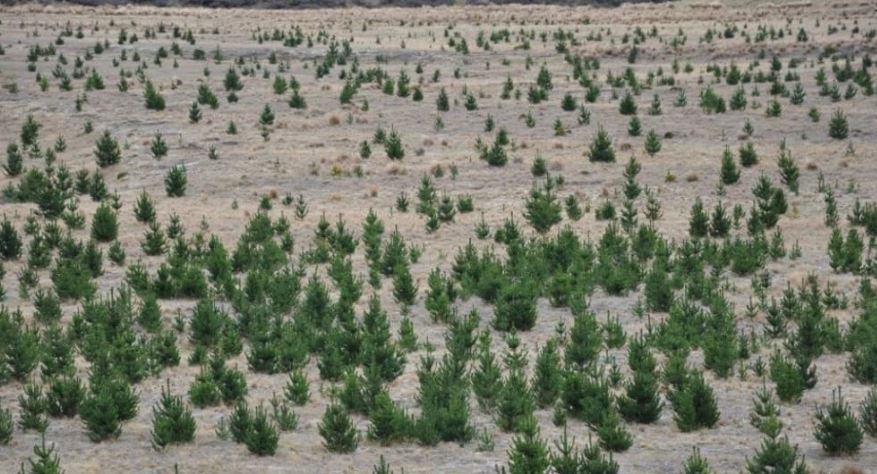
On two subjects, agreement between parties was strong – battling wilding pines and getting solar energy on to farms
Posted in: News